
Earlier this week, I was sitting on my train home mindlessly scrolling through Instagram and, as my incredibly high quality newly smashed iPhone screen does, had accidently clicked on a sponsored post and found myself being directed to their website. Without even thinking, I reacted quickly to close the tab and get back to my feed.
After seeing a few more sponsored ads scattered throughout my feed and pondering back on this semester’s topics, I recalled that sponsored ads only cost these businesses their money once users actually click on them – bringing us back to the almighty pay-per-click (PPC) advertising.
So, what if all users that are seen to be clicking on these sponsored ads were in the same boat as I was? What if a business engages a paid ad, has a range of users click on this ad, which they then are required to pay for, but nobody actually sees their content? What is a ‘click’ really worth?
Marketing professor and branding columnist Mark Ritson argues that when talking about Cost Per Mille (CPM), the ‘M’ varies 10x more than the ‘C’ or the ‘P’. He suggests that traditional marketing power often outweighs the ‘flaky metrics of social’ (2016). This is a reflection what I’ve previously mentioned, faux engagement and responsiveness on paid social media ads – as Ritson would say; “what bullshit are you selling to your clients?”.
Let’s look at how successful PPC actually is, and if it’s time to reassess which marketing channels businesses should be investing in.
For PPC advertising to be successful, it’s not always about high click-through rates (CTR). In fact, higher CTR’s can actually indicate wasteful advertising. High CTR’s may not equal high sales and does not indicate high quality scores. What it can indicate though, is high spend – paying for every click, and when you’re advertising with keywords that are priced too high, and won’t turn a profit even if they convert, a business can be spending money without actually bringing in more business.
According to WordStream (2017), an ad needs keywords that are relevant and affordable. A good CTR means first targeting the right words, then getting as many people as you can to click on those ads. But even still, how can a business tell if people are even looking at their content when clicking their ads? How good can the conversion rate actually be?
Here are some numbers:
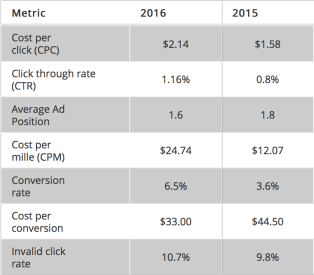
Sampled from a group of approximately 50 advertisers on the Google AdWords ad network, these numbers aren’t representative of the entire market, but are a good place to start in terms of numbers. With CPM more than doubling since the year before and a conversion rate of 6.5%, the average cost per conversion is $33.00.
These numbers can be interpreted how you see fit, but depending on the type of business and the product, are these costs worth it? Is PPC worth the money that advertisers are spending? Or should our focus as marketers be shifting to something a little more… ‘traditional’?
 HG marketing