
Spam is most commonly defined by The Oxford Dictionary as ‘Irrelevant or unsolicited messages sent over the Internet, typically to a large number of users, for the purposes of advertising, phishing, spreading malware, etc.’. However, a more appropriate definition can be summarised by the urban dictionary as ‘spam spam spam spam spam spam spam spam spam spam spam spam spam spam spam spam spam spam spam spam spam spam spam spam spam spam spam spam spam spam spam spam spam spam spam spam spam spam spam spam spam spam spam spam spam spam spam spam spam spam spam spam spam spam spam spam spam spam spam spam spam spam spam spam spam spam spam spam spam spam spam spam spam spam spam spam spam spam spam spam spam spam spam spam spam spam spam spam spam spam spam spam spam spam spam spam spam spam spam spam spam spam spam spam spam spam spam spam spam spam spam spam spam spam spam spam spam. That is what spam is. Would be better without it.’ This definition both accurate and equally as annoying as receiving spam emails.

Here, we are going to decipher spam in all its glory, through art in the form of an acrostic poem.
Subscribing & Unsubscribing
It can be noted that very commonly when creating accounts, entering online competitions, viewing certain webpages or even signing up to subscription emails, we have been asked on numerous occasions to enter our email addresses to a business or organisation’s website. From the moment you publish your email address, you no longer have control over who can see and send to your email address, leading to the beginning of the end of your clean inbox and empty junk folder.

While under the Spam Act 2003, legit business emails such as newsletters or promotions are required to have functioning ‘unsubscribe’ links in all of their emails, it’s the fake, dodgy scam emails that make it almost more dangerous to click those unsubscribe buttons. These can often lead to viruses and hacking, and should be handled with caution, which brings us to our second letter – P.
Phishing and Scams
While people often use the terms spam and scam interchangeably, they are very different things. A scam, as defined by The Oxford Dictionary is ‘a dishonest scheme; a fraud. While spam and scams are not the same thing, scams in email can often appear to replicate spam emails and aim to deceive email users into believing their links will lead them to legit businesses or prizes they have ‘won’. According to the Australian Competition & Consumer Commission or ACCC, in 2017 alone, over $90,000,000 had been lost to frauds and scams, with over 24% of these scams being delivered via emails.


ScamWatch – Types of Scams
As mentioned above, scam emails can also have links that appear to be ‘unsubscribe’ links, but can actually lead to hacking or malware. A more specific term for these scam emails is ‘phishing’. This is where scammers will often pose as major corporations, attempting to maliciously coax information from users such as credit card details, bank account numbers, passwords and other personal information.
Attractiveness
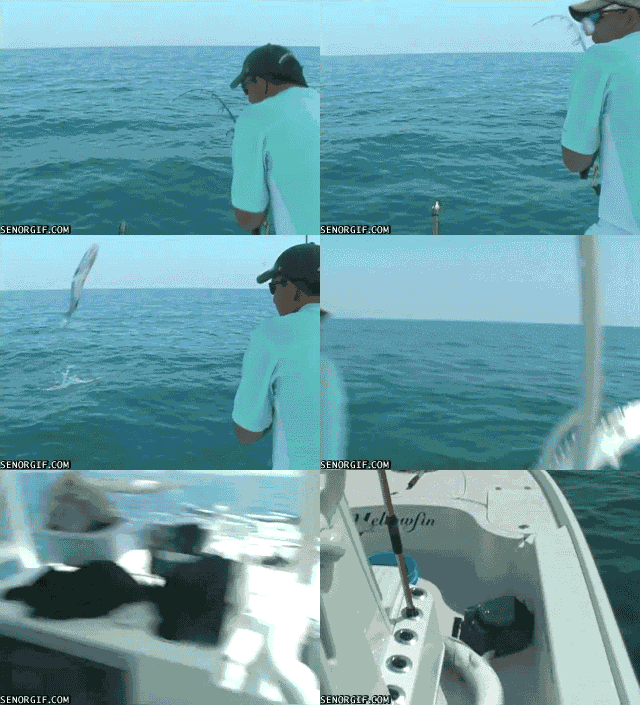
So why is spam email so popular? According to Rao & Reiley (2012), spam is incredibly inexpensive to run, with only 1 in 25,000 emails needing to be converted to a purchase for it to be worthwhile, and a very low risk of detection or prosecution makes using spam emails very enticing to businesses.
Spam emails are easy to create and send, with one generic email able to be sent to hundreds of thousands of addresses with one click, it’s one of the easiest and cheapest (practically free) forms of advertising there is.
Misuse & Manipulation
So how do spammers and scammer actually get our email addresses? There are 4 main ways that our email addresses can be obtained:
- Spammers and scammers will illegally purchase lists of email addresses from legitimate databases or other user’s address lists.
- They will use ‘bots’ to crawl the web searching and harvesting any link or word that contains the ‘@’ symbol.
- The use of ‘dictionary programs’ in which hackers and scammers use to generate hundreds of thousands of different combinations of letters and numbers, guaranteeing at least some will work.
- Or, going back to our first point, users will unknowingly hand over email addresses and other information to fake or dishonest subscription newsletter services.

So, while there are some restrictions on what spammers can and cannot do, there are a number of things that can lead to your junk folder drowning in spam with schools of scam swimming through, just waiting to phish your information right out of your boat.
 HG marketing
Great read! I do agree when you say spam is easy, quick and inexpensive for those who use it. I think email address’s like your Gmails and Outlooks do a great job of filtering out these messages into the direct spam section. Saving me greatly from getting constant spam email notifications. I have often unsubscribed after signing up to promotions because of the constant and annoying messages. Businesses must come up with more effective marketing for their products and services to successful because bulk SMS’s just aren’t working. Great read as always!
LikeLiked by 1 person
I agree! I almost find it more annoying when I have chosen to subscribe to a business’s specific emails such as only for promotions or sales, but they continue to send me email after email about unrelated topics that I don’t care about. This makes me very quick to jump on the ‘unsubscribe’ link!
LikeLike
Really enjoyed this blog post!
You’ve covered some great topics here. As you said, Spam is attractive to those who use it because of how inexpensive and easy it is to use. Which makes it so important that we can recognize when it’s a real email or fake. Although you only need 1 out of 25,000 emails to be converted to make it worthwhile – as a consumer myself I’m not attracted to a brand if they choose to send spam emails to my account. I think there are much more effective ways a business can invest their time and money to market their products.
LikeLiked by 1 person
I agree with you completely! While it’s easy to understand the attractiveness as it is so so cheap, but I don’t know anybody that would ‘fall for it’.
LikeLiked by 1 person
Very True! I think as more consumers become aware of what they need to look for to identify if it’s real or fake it’s hard to ‘fall for it’.
Be sure to read my latest blog post and let me know you thoughts.
LikeLike